North Cape (Norway)
Northernmost car-accessible point in Europe, popular tourist destination.

United Kingdom Hydrographic Office · Public domain
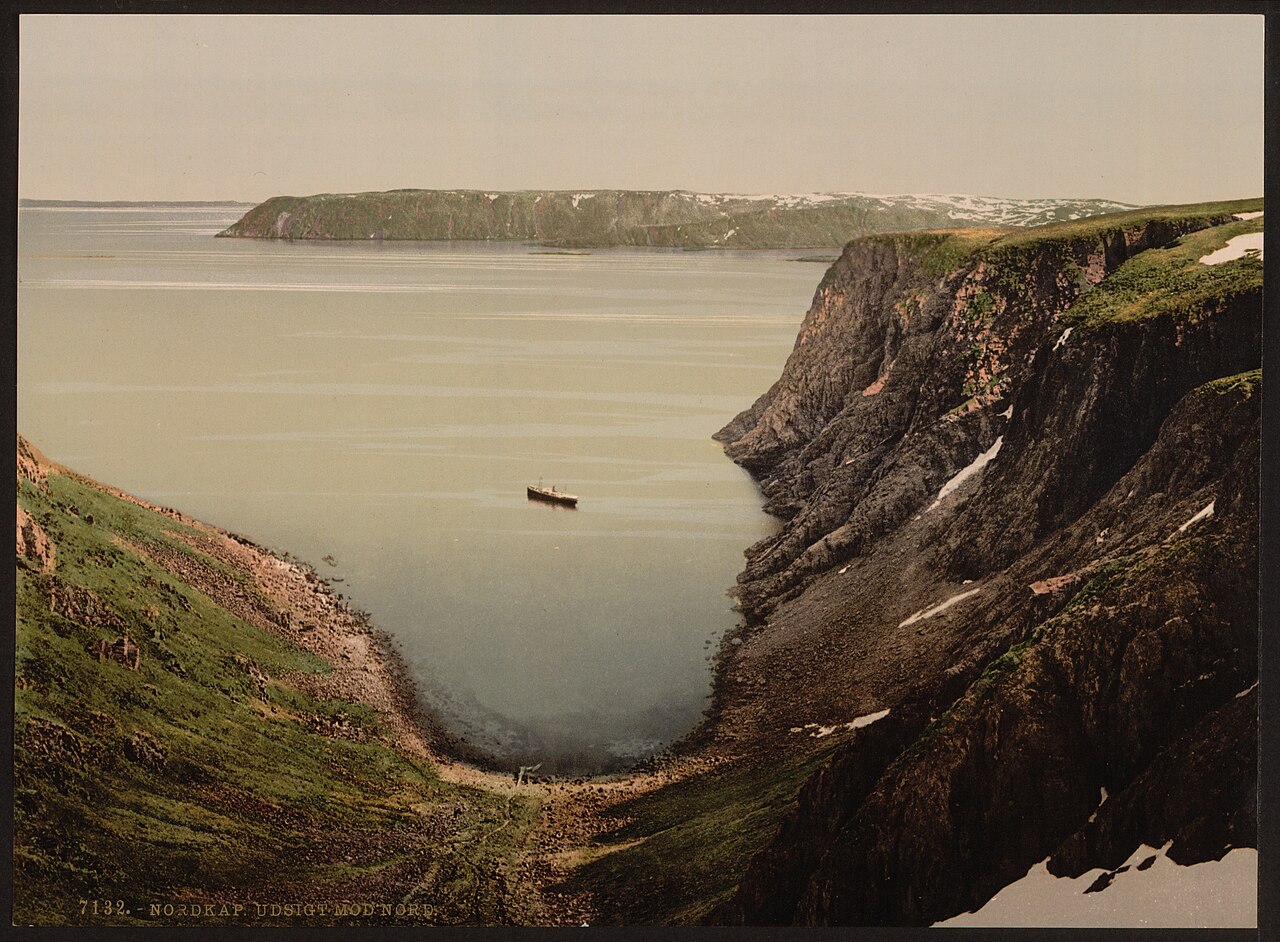
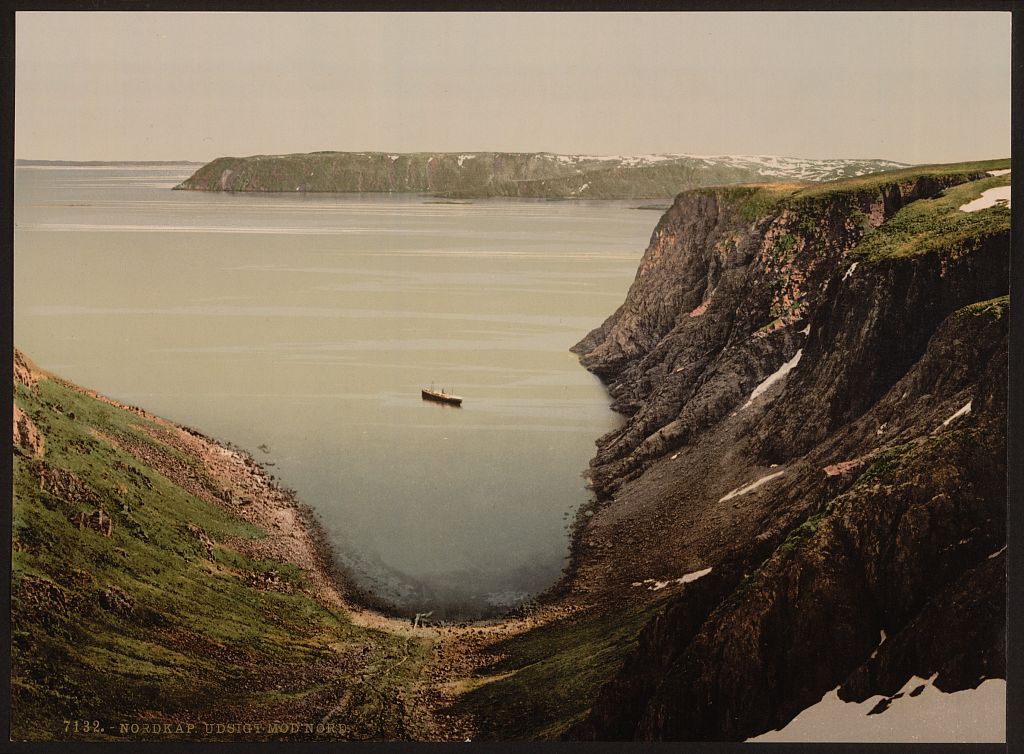
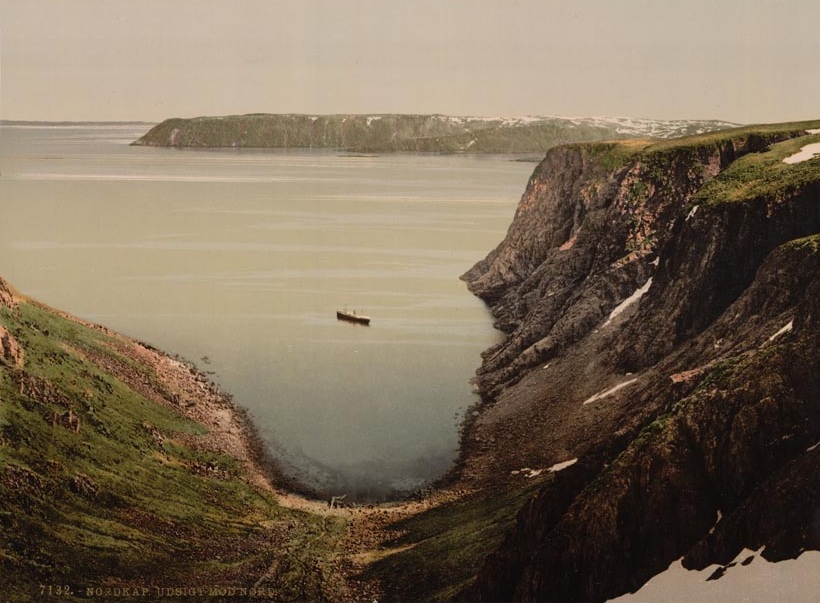
The North Cape (Norwegian: Nordkapp; Northern Sami: Davvenjárga) is a cape on the northern coast of the island of Magerøya in Northern Norway, located in Nordkapp Municipality, Finnmark county. The cape is the northern terminus of European route E69, making it the northernmost point in Europe accessible by car.
- Location
- 71°10′21″N 25°47′04″E
- Notable feature
- Northernmost point in Europe accessible by car
- Midnight sun period
- 14 May to 31 July
Lore & Background
Early tourists climbed the cape via a path with wired ropes from Hornviken and celebrated by writing 'Cape cards' and viewing the midnight sun.
Reader's Guide
Its plateau, accessible via the E69 highway and North Cape Tunnel, draws tourists for the midnight sun and views of the Barents Sea. The cape is also a terminus for long-distance routes: the EuroVelo bicycle routes EV1, EV7, and EV11, the E1 European long-distance path, and events like the Trans Europe Foot Race and NorthCape4000 bicycle race.
Did You Know?
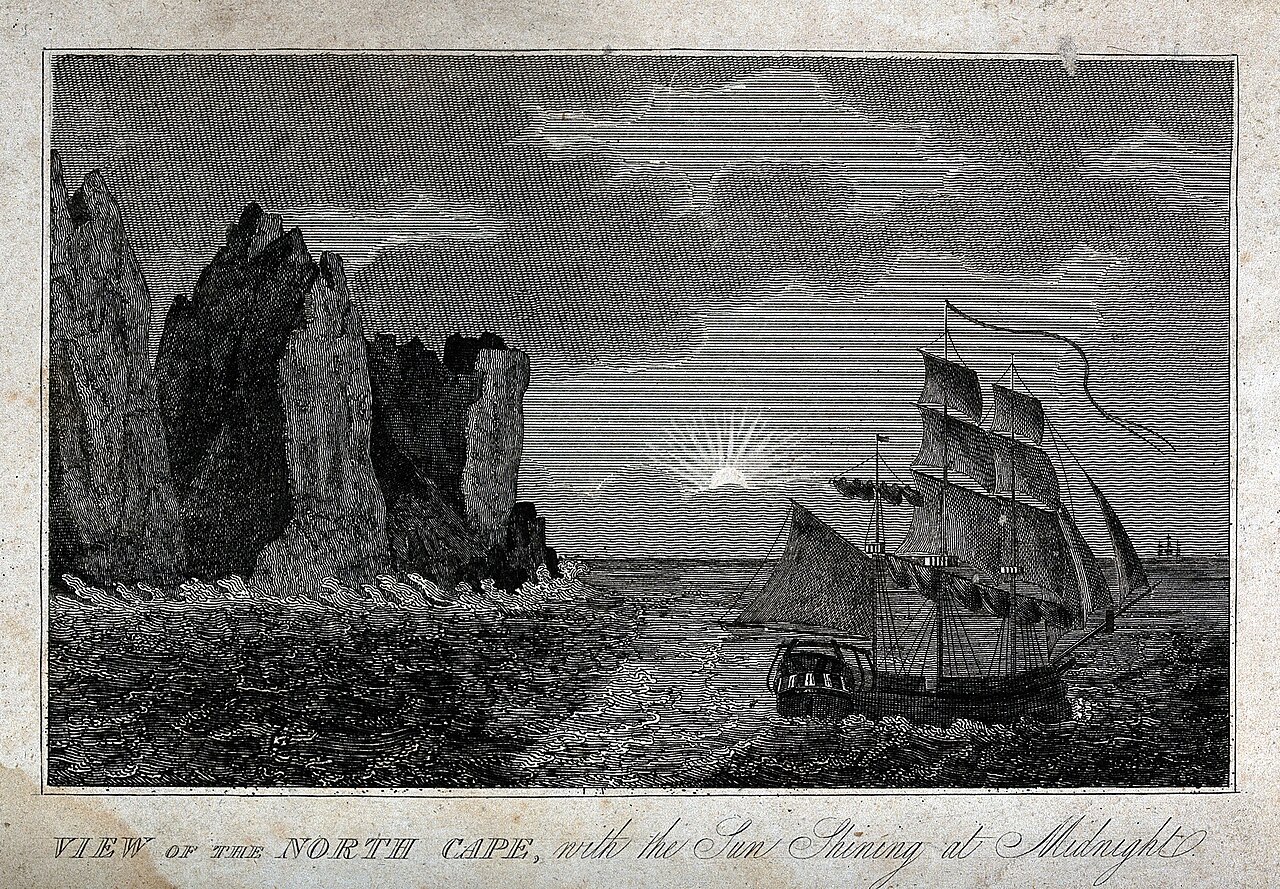
- The midnight sun can be seen from 14 May to 31 July, with the sun at its lowest between 12:14 am and 12:24 am.
Geography & the 'Northernmost' Myth
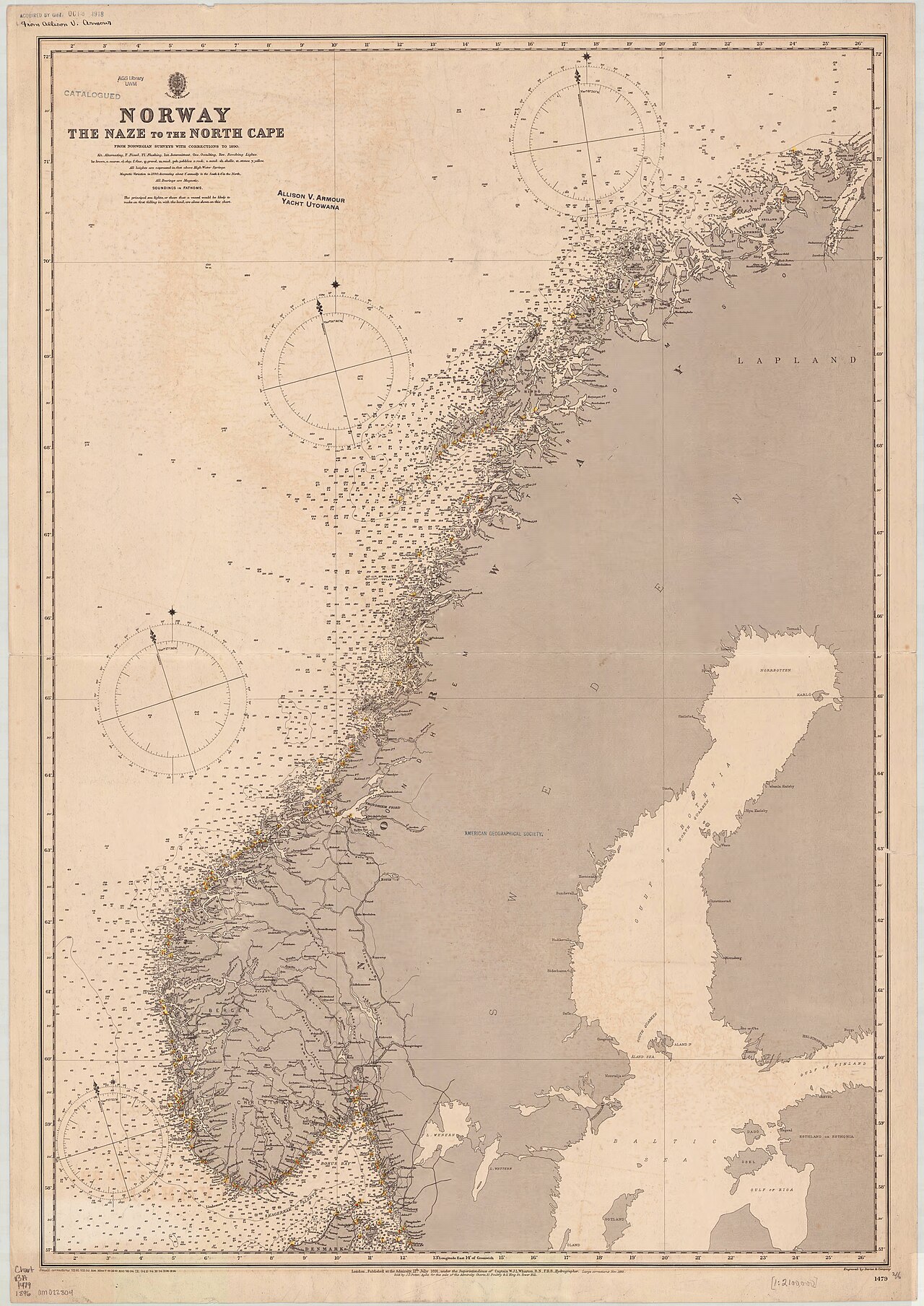
The North Cape sits on the island of Magerøya in Finnmark county, perched on a 307-metre cliff above the Barents Sea. Its coordinates—71°10′21″N, 25°47′04″E—place it roughly 2,102 kilometres from the North Pole, and it marks the dramatic meeting point where the Norwegian Sea, part of the Atlantic, flows into the Barents Sea, part of the Arctic. Despite its iconic status, Nordkapp is frequently mislabelled as Europe's northernmost point. In reality, the neighbouring Knivskjellodden Cape stretches about 1,450 metres further north, and both sit on Magerøya rather than the mainland. The true northernmost point of mainland Europe is Cape Nordkinn, roughly 5.7 kilometres south and 70 kilometres east. If islands are included, Norway's Svalbard archipelago or Russia's Franz Josef Land claim the title, hundreds of kilometres further north. The midnight sun graces the plateau from 14 May through 31 July, dipping to its lowest point just past midnight around 00:14 to 00:24.
History & Exploration
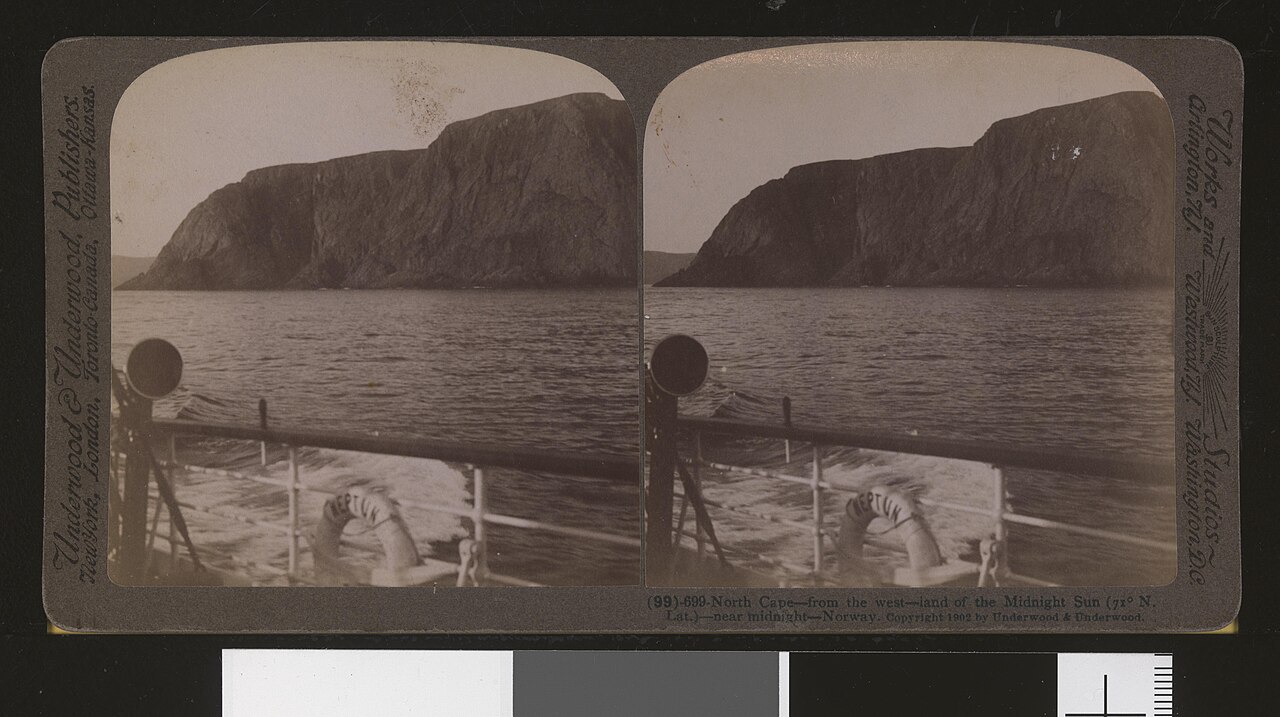
In 1553, English mariner Steven Borough, commanding the Edward Bonaventure, sailed past this headland while searching for the Northeast Passage and gave it the name that endures today. For centuries the cape remained remote, but the tide turned in the 1870s when King Oscar II of Norway and Sweden visited in 1873, sparking a wave of royal and aristocratic tourism. German Kaiser Wilhelm II followed in 1891, and both monarchs left granite monuments on the plateau. Thomas Cook & Son was arranging package tours to the cape by 1875, and coastal steamers from Germany made the journey accessible to a broader public. Visitors would climb a roped path from Hornviken and commemorate their arrival with the now-famous 'Cape cards.' In 1891–92, an octagonal wooden structure called the Champagne Pavilion was built atop the cliff. The cape's most violent chapter came in 1943, when the Battle of the North Cape saw the German battleship Scharnhorst destroyed by HMS Duke of York and the Norwegian destroyer HNoMS Stord in the Arctic waters just offshore.
Access & Infrastructure
Reaching the North Cape by road is a feat of Arctic engineering. The European route E69 motorway terminates here, making it the northernmost public highway in Europe. The final link is the North Cape Tunnel, an undersea passage connecting Magerøya to the mainland. The road itself was not built until 1956, so for most of its history the cape was accessible only by sea or on foot. Today, cruise ships—particularly the Havila Kystruten and Hurtigruten coastal vessels—dock at nearby Honningsvåg, 33 kilometres away, where coaches and regular buses shuttle visitors to the plateau. The nearest airport, Honningsvåg Valan, links to Tromsø Langnes International. For cyclists, EuroVelo routes EV1, EV7, and EV11 connect the cape to Sagres in Portugal, Malta, and Athens. Winter travel is more challenging: heavy snow and wind make the final stretch convoy-only at certain times, and E69 was once the only winter-closed European E-route. In 2026, the County Governor ruled that charging an admission fee for plateau entry must cease immediately, following earlier court decisions against parking fees.
Sport & Cultural Legacy
The North Cape has become a symbolic finish line for some of Europe's most ambitious endurance events. The 2009 Trans Europe Foot Race covered 4,485 kilometres from Bari, Italy, to the plateau. The NorthCape4000 bicycle race spans roughly 4,200 kilometres to the same destination. In August 2014, the first stage of the Arctic Race of Norway was staged on the cape, starting from Hammerfest. The plateau itself hosts North Cape Hall, a visitor centre opened in 1988 that houses a café, restaurant, post office, souvenir shop, small museum, and video cinema. The site draws around 8,000 visitors on busy days, a figure the operating company Nordkapps VEL has cited as justification for the operational demands of maintaining such a remote, exposed location. Visitors arriving on foot, by bicycle, or other non-motorized means have long enjoyed free entry. The plateau's position above the common cloud base means fog frequently obscures the view, though a full-price ticket remains valid for multiple entries within 24 hours.
Gallery
Frequently Asked Questions
How does North Cape (Norway)'s story end?
As a real geographic feature rather than a fictional character, North Cape has no narrative arc to conclude; it simply continues to stand as a well-visited landmark in Nordkapp Municipality. Its ongoing 'plot' is the daily cycle of tourists arriving to watch the sun trace its path above the sea.
More in Peninsulas And Capes 1-24
Elsewhere in the Peninsulas And Capes universe
Spotted an error? Know more?
This is a living reference — every entry is fact-audited, and reader corrections feed straight into our audit queue. Suggest an edit · See this site's audit record