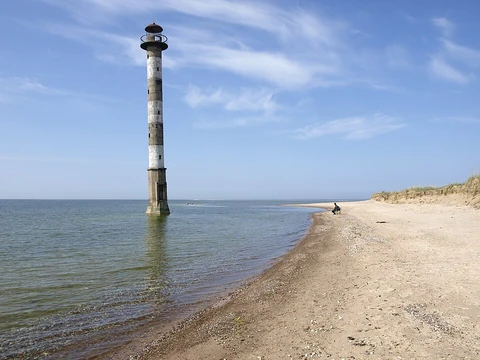
Yamal Peninsula
A Siberian peninsula rich in gas, permafrost, and reindeer herding.

katorisi · CC BY-SA 3.0
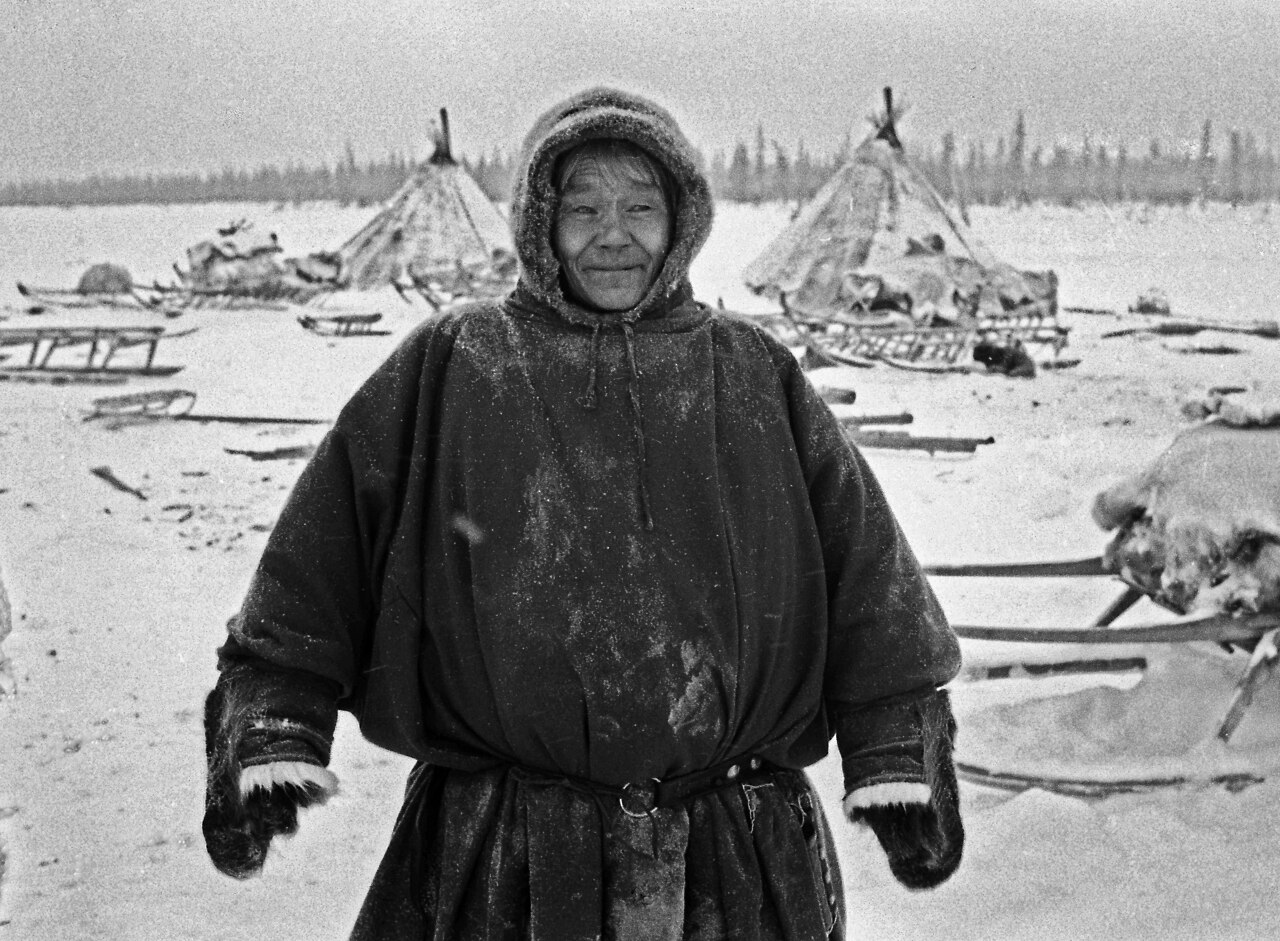
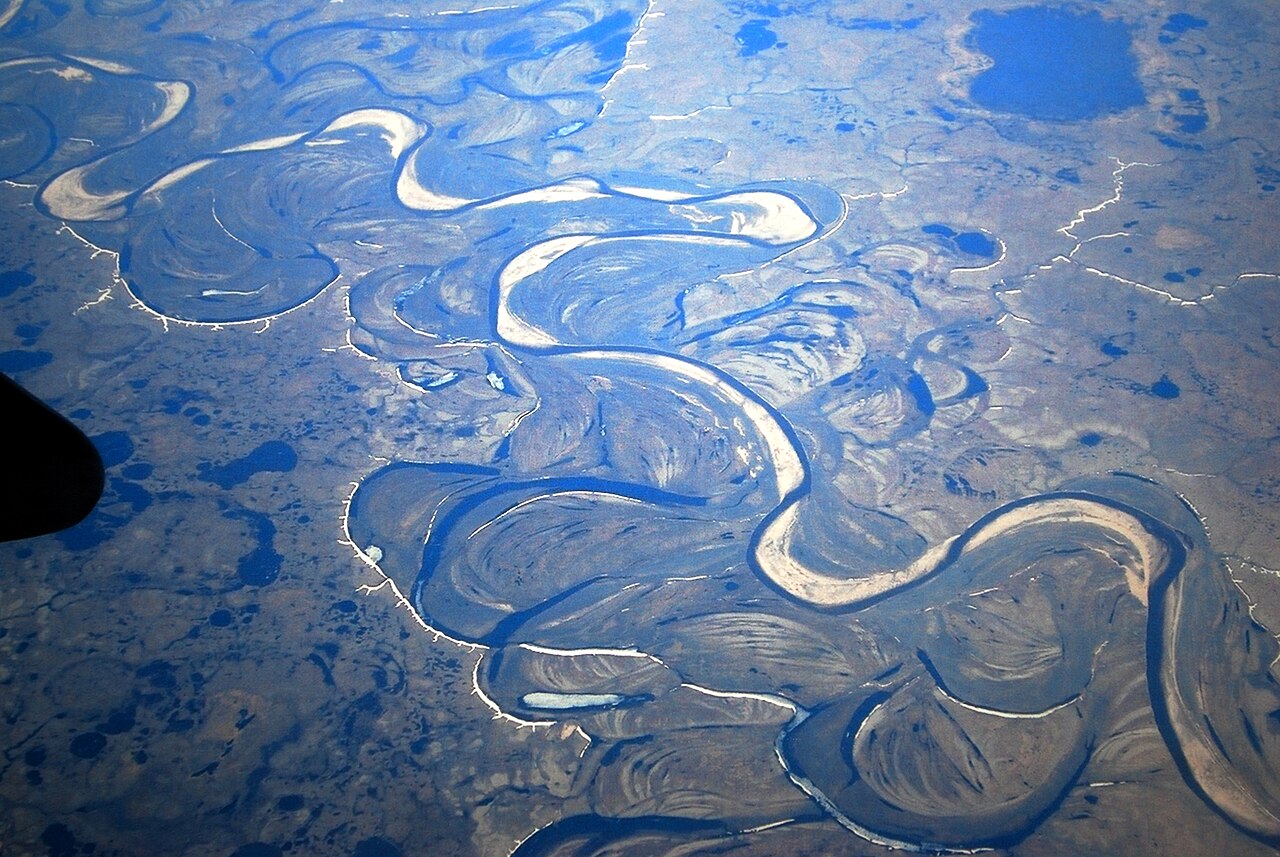
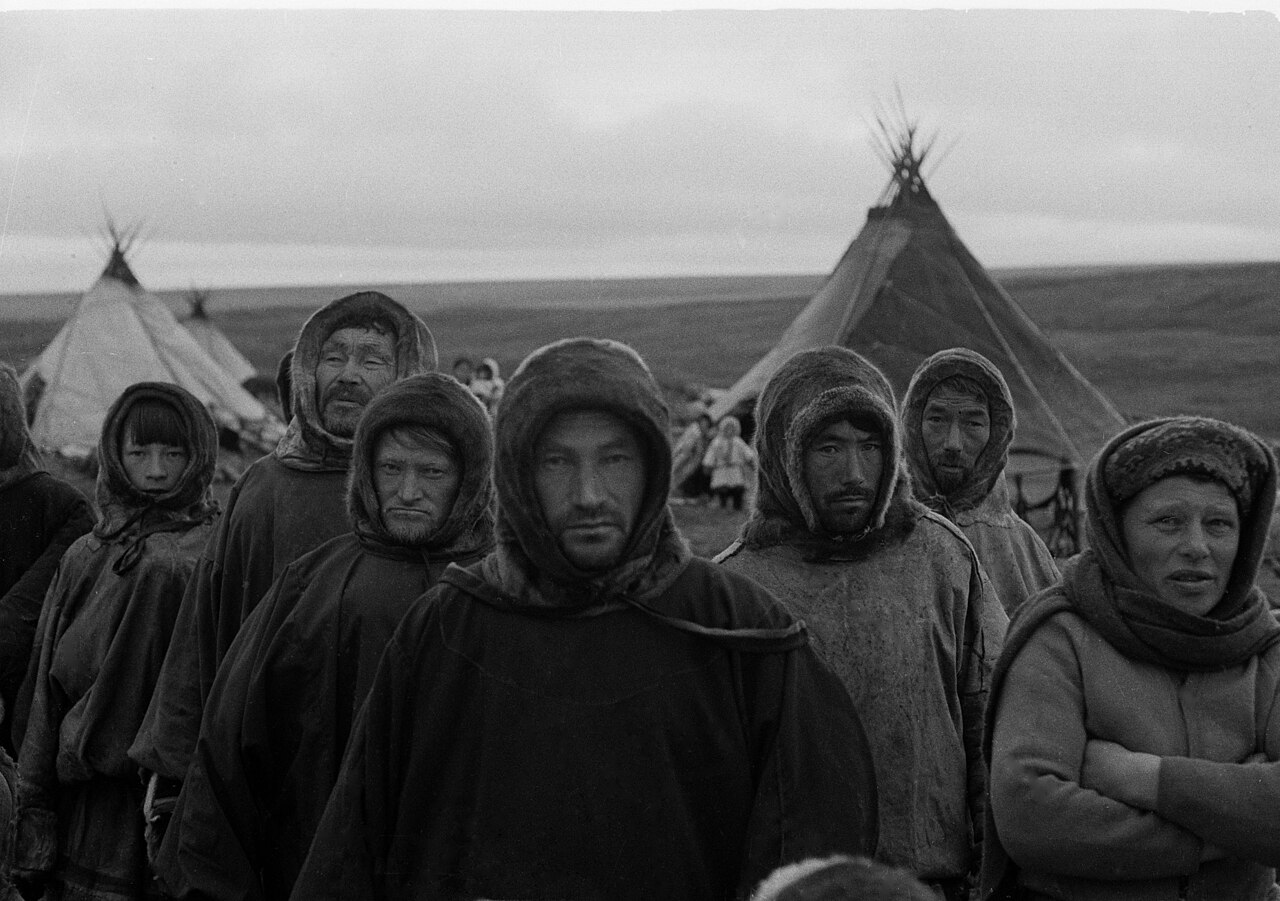
The peninsula is significant for its role in climate research, its vast natural gas reserves, and its preservation of traditional nomadic reindeer husbandry among the indigenous Nenets people.
- location
- Yamalo-Nenets Autonomous Okrug, northwest Siberia, Russia
- bordering_bodies_of_water
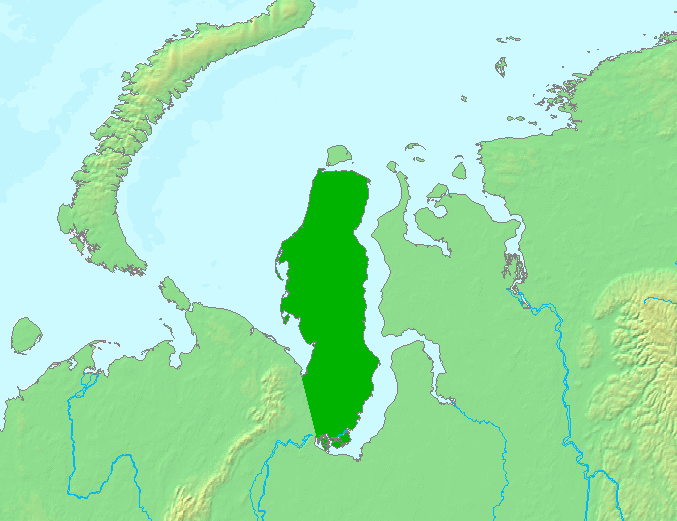
- Kara Sea, Baydaratskaya Bay, Gulf of Ob
- indigenous_inhabitants
- Nenets
- meaning_of_name
- End of the Land (in Nenets languages)
- major_natural_resources
- hydrocarbon fields, including large gas fields
Lore & Background
The Yamal Peninsula is inhabited by a multitude of migratory bird species. The female calf was determined to be one month old at the time of death. The peninsula consists mostly of permafrost ground and has numerous lakes of thermokarst origin. Many hydrocarbon fields have been discovered there, including large gas fields, with the main resources concentrated in the permeable Aptian-Cenomanian complex. The area is largely undeveloped, but work is ongoing with several large infrastructure projects, including a gas pipeline and several bridges. The sinkhole appeared to be the result of a huge explosion, and several hypotheses were suggested, including a meteorite, a UFO, or the collapse of an underground gas facility. Cryovolcanism has been pointed out as the most probable cause in recent research. Tests showed unusually high concentrations of methane near the bottom of the sinkhole.
Reader's Guide
The Yamal Peninsula holds significance for multiple fields. Economically, Yamal holds Russia's biggest natural gas reserves, estimated at 55 trillion cubic meters. Russia's largest energy project in history, known as the Yamal project, puts the future of nomadic reindeer herding at considerable risk. Environmentally, the peninsula has drawn attention for the Yamal craters, believed to be caused by the destabilization of gas hydrates containing huge amounts of methane gas, likely linked to warming regional temperatures. Offshore, methane is leaking from the seabed of the Kara Sea due to geothermal heat flux thawing the permafrost, a process likely exaggerated by global warming. These phenomena make Yamal a critical site for understanding climate change impacts in the Arctic.
Did You Know?
- The name Yamal means 'End of the Land' in the Nenets languages.
- Yamal holds Russia's biggest natural gas reserves, estimated at 55 trillion cubic meters.
Etymology and the Essence of a Peninsula
The word peninsula traces its roots to Latin, where it combines paene, meaning almost, with insula, meaning island. This pairing captures the fundamental character of the landform: a stretch of territory that is nearly encircled by water yet remains anchored to a larger continental body. The defining trait is that the water surrounding the land is typically continuous, even if it has never been given a specific name. A peninsula is, at its core, ground that is hemmed in by water on most sides while preserving a connection to the mainland. This sets it apart from a true island, which is fully encircled by water, and from a minor coastal bump that does not project as decisively from the shoreline. The concept spans an enormous range of scales, from vast continental juts to modest coastal extensions, and the encircling waters form a natural boundary that profoundly shapes the ecology, climate, and human settlement of the enclosed territory.
A Hierarchy of Coastal Landforms
Within the broader family of peninsular features, geographers and cartographers deploy a refined vocabulary to distinguish subtle differences in shape, prominence, and scale. A given landform may be variously described as a headland, a cape, an island promontory, a bill, a point, or a spit, each label carrying implications about how far the land reaches into the water and how visually dominant it appears against the horizon. A point, for example, is generally understood as a tapering extension of ground that projects into a body of water but lacks the commanding stature of a cape. English offers two acceptable plural forms: the more common peninsulas and the rarer Latin-derived peninsulae. The concept even extends into fluvial geography, since a river carving through an extremely tight meander can be said to create a peninsular feature within the nearly closed loop of water it encloses, demonstrating that the idea reaches well beyond simple coastal settings.
Peninsulas as Continental Architects
The peninsular concept operates across a vast range of scales, from modest coastal projections to enormous continental extensions. Europe, for instance, is sometimes regarded as one colossal peninsula jutting off the broader Eurasian landmass, making it one of the largest peninsular features on the planet and the only one to carry the formal designation of a full continent, a status rooted more in convention than in strict scientific reasoning. Within Europe, four principal component peninsulas stand out: the Scandinavian, Iberian, Balkan, and Apennine. The Iberian Peninsula, encompassing continental Portugal, Spain, Andorra, Gibraltar, and a small portion of southern France, serves as the dominant geographical feature of its region. Similarly, the Apennine Peninsula defines Italy's overall shape, while the Deccan Peninsula represents the sole and largest geographical feature of the Indian subcontinent. These major peninsular structures shape the political, cultural, and ecological boundaries of entire regions.
A Worldwide Catalogue of Projections
Peninsular landforms appear on every inhabited continent, producing a remarkably diverse catalogue of coastal extensions. In Africa, the Horn of Africa juts into the Guardafui Channel as the easternmost projection of the continent, encompassing Djibouti, Eritrea, Ethiopia, and Somalia. In Asia, the Korean landmass forms a peninsula bounded by the East Sea to the east and south and the Yellow Sea to the west, with the Korea Strait linking the two bodies of water. The Arabian Peninsula stands as the sole and largest peninsular feature of Southwest Asia, while Anatolia holds a comparable distinction in West Asia. In North America, the Labrador Peninsula encompasses all of Labrador and most of Quebec. Even in Antarctica, multiple peninsulas are catalogued, including the Antarctic Peninsula, Edward VII Peninsula, Fletcher Peninsula, Fowler Peninsula, and Martin Peninsula. This worldwide distribution underscores that peninsular formation is a fundamental process in the shaping of Earth's coastlines.
Gallery
Frequently Asked Questions
Who is Yamal Peninsula?
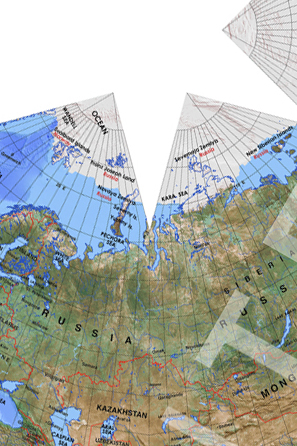
Yamal Peninsula is a roughly 700-kilometer stretch of Arctic land in northwest Siberia, Russia, sitting within the Yamalo-Nenets Autonomous Okrug. It is hemmed in by the Kara Sea and Baydaratskaya Bay on its western side and the Gulf of Ob on its eastern side.
What are Yamal Peninsula's powers/role?
The peninsula packs some of the largest natural-gas reserves on Earth and doubles as a vital laboratory for permafrost and climate science. It also sustains the centuries-old nomadic reindeer-herding way of life practiced by the indigenous Nenets people.
How does Yamal Peninsula's story end?
Because it is a living landscape rather than a plotted character, its arc is still unfolding: thawing permafrost, expanding hydrocarbon extraction, and the cultural resilience of Nenets herders all shape what comes next. The long-term trajectory depends on how industrial growth and ecological and indigenous preservation are balanced.
Why is Yamal Peninsula important?
It underpins a major share of Russia's gas supply while simultaneously serving as a sensitive barometer for Arctic climate change. Its very name, translating to 'End of the Land' in Nenets languages, captures its identity as a frontier where deep tradition meets extreme geography.
Where exactly is Yamal Peninsula located?
It occupies the Yamalo-Nenets Autonomous Okrug in northwest Siberia, Russia, running roughly 700 km (about 435 miles) along the Arctic coast. The Kara Sea, Baydaratskaya Bay, and the Gulf of Ob form the water boundaries on either side.
More in Peninsulas And Capes 25-26
Related in Peninsulas And Capes
Links follow this subject's own source article.
Elsewhere in the Peninsulas And Capes universe
Spotted an error? Know more?
This is a living reference — every entry is fact-audited, and reader corrections feed straight into our audit queue. Suggest an edit · See this site's audit record